
After 11 years in digital marketing and helping hundreds of people start their online income journeys, I’ve learned some painful but valuable lessons.
If I could go back and talk to my younger self when I was just starting out, these are the 10 things I wish I knew to make money online that I wish someone would have told me.
These aren’t theoretical insights from reading about online business—they’re real-world lessons earned through mistakes, failures, and eventually, success.
Some of these might surprise you, others might challenge what you’ve heard from the “gurus,” but all of them could save you months or even years of frustration.
1. Success Takes Longer Than Anyone Tells You (And That’s Actually Good News)
When I started my online journey, every course and guru promised results in 30, 60, or 90 days. The reality?
Building a sustainable online income typically takes 6-18 months of consistent effort, and that’s if you’re doing everything right.
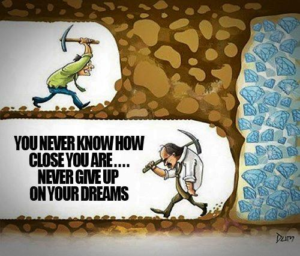 Why this is actually good news: The longer timeline means most people give up before they see results, which creates more opportunity for those who persist.
I’ve watched countless people quit just months before their breakthrough.
What I wish I’d known: Plan for 12 months before expecting significant income.
This mental shift changes everything—instead of panicking at month 3 when you’re not rich yet, you’re celebrating small wins and building momentum.
The mindset shift: Think of your first year as getting paid to learn one of the most valuable skills in the modern economy. Every “failure” is actually expensive education that’s making you more valuable.
2. Making Money Online is in Solving Problems, Not Following Your Passion
This one hurt because I spent my first two years trying to monetize my passion for travel blogging.
I created beautiful content, built a decent following, but barely earned enough to buy coffee.
Everything changed when I shifted focus to solving actual problems people had with digital marketing.
Suddenly, people were willing to pay for my knowledge because it solved expensive problems they were facing.
The reality: People don’t pay you to follow your dreams—they pay you to help them achieve theirs.
Your passion should inform your niche choice, but market demand should drive your content strategy.
The profitable question: Instead of asking “What am I passionate about?” ask “What problems can I solve that people are already paying to fix?”
Example: I love photography, but teaching photography basics barely pays.
Teaching photographers how to get clients and run profitable businesses? That’s a different story entirely.
Let’s continue as we explore those things I wish I knew about making online income.
3. You Don’t Need a Massive Audience to Make Money Online
I used to obsess over follower counts and email list size, thinking I needed 100,000 followers to make a living online.
Then I met a consultant earning $15,000/month with 800 email subscribers.
The truth: 1,000 highly engaged followers who trust your recommendations are worth more than 100,000 random followers who barely know you exist.
What matters more than size:
- How well you know your audience’s problems
- How much they trust your recommendations
- How relevant your solutions are to their needs
- How well you communicate value
My breakthrough moment: I made my first $5,000 month with just 1,200 email subscribers. The key was knowing exactly what they needed and positioning my offer perfectly.
4. Free Content is Your Best Sales Tool (When Done Right)

Early on, I was terrified of giving away too much for free. I thought if I shared my best strategies, no one would pay for my courses or consulting.
I was completely wrong. The more valuable free content I created, the more people wanted to hire me or buy my products.
Free content doesn’t compete with your paid offerings—it advertises them.
The principle: Your free content should be so good that people think, “If this is what they give away for free, their paid stuff must be incredible.”
What works:
- Solve real problems in your free content
- Share your actual strategies and methods
- Be generous with actionable advice
- Use free content to demonstrate your expertise
The magic formula: Give away your “what” and “why” for free, charge for your “how” and “done-with-you” services.
5. Multiple Small Income Streams Beat One Big Bet
I spent my first year trying to create the “one perfect course” that would make me rich. Instead of one $10,000 launch,
I should have focused on creating multiple $1,000 income streams.
Why diversification matters:
- Reduces risk if one income stream disappears
- Allows you to test what works without betting everything
- Creates compound growth as streams support each other
- Provides multiple opportunities to serve your audience
My current income mix:
- Freelance consulting (40%)
- Online courses (25%)
- Affiliate marketing (20%)
- Templates and tools (15%)
The strategy: Start with one income stream, get it to $1,000/month, then add the next one. Don’t try to build everything simultaneously.
6. The Riches Really Are in the Niches (But Choose Wisely)
“Go broad to reach more people” was the worst advice I followed early on. When I tried to help “anyone interested in digital marketing,” I helped no one effectively.
The niche that changed everything: Instead of general digital marketing, I focused on “content marketing for local service businesses.”
Suddenly, my messaging was clear, my audience was engaged, and my prices went up.
How to choose a profitable niche:
- Find the intersection of your experience, interest, and market demand
- Look for groups of people with expensive problems
- Choose audiences that have budget allocated for solutions
- Pick niches where you can become a recognized expert
Warning: Avoid niches that are too narrow (not enough people) or too broad (too much competition with no clear positioning).
7. Consistency Beats Perfection Every Single Time
I used to spend weeks perfecting a single blog post, trying to make it absolutely perfect before publishing.
Meanwhile, creators posting “good enough” content consistently were building larger audiences and making more money.
The perfectionism trap:
- Perfect content that’s never published helps no one
- Consistent “good” content builds trust and authority over time
- You improve through practice, not through planning
- Your audience wants to see your journey, not just your highlights
What consistent really means:
- Publishing on a predictable schedule your audience can rely on
- Showing up even when you don’t feel like it
- Focusing on being helpful rather than impressive
- Building habits that compound over time
My rule now: Publish when it’s 80% ready, then improve based on feedback.
8. Your Network Determines Your Net Worth (Build Relationships First)
I spent too much time creating content and not enough time building relationships. The biggest opportunities in my career came through connections, not cold outreach or perfect SEO.
So making money online comes down to the skills you have and the type of relationships you build.
Relationship building strategies that actually work:
- Comment meaningfully on other creators’ content
- Share others’ work with your own insights added
- Attend virtual events and actually participate

- Offer help before asking for anything
- Follow up and stay in touch consistently
The compound effect: One genuine relationship can lead to speaking opportunities, joint ventures, affiliate partnerships, or simply someone sharing your work with their audience.
My best ROI activity: Spending 30 minutes daily engaging with other creators in my niche. This has generated more opportunities than any other marketing activity.
9. Systems and Automation are Your Secret Weapons
For my first three years, I was manually doing everything—posting on social media, sending emails, managing customers. I was working harder, not smarter.
The breakthrough: When I started systematizing and automating repetitive tasks, my income went up while my working hours went down.
High-impact systems to implement:
- Email marketing automation sequences
- Social media scheduling and batching
- Customer onboarding and support processes
- Content creation workflows and templates
- Lead generation and nurturing systems
The 80/20 rule: 20% of your activities generate 80% of your results. Systematize everything else so you can focus on the high-impact work.
Time investment: Spend one day per month building systems. It feels like you’re not making progress, but it compounds dramatically over time.
10. Mindset and Psychology Matter More Than Tactics
This is the one that surprised me most. I thought success was about finding the right strategies and tactics. But the biggest barrier to my success was my own mindset.
Sure you can be about making money online, but unless you possess the right mondset, that dream will only go up in smoke.
Mental blocks that held me back:
- Imposter syndrome: “Who am I to teach this?”
- Perfectionism: “It’s not good enough yet”
- Comparison: “Everyone else is better than me”
- Fear of judgment: “What if people criticize my work?”
- Scarcity thinking: “There’s not enough opportunity for everyone”
The mindset shifts that changed everything:
- You don’t need to be the world’s expert, just one step ahead of your students
- Done is better than perfect, and practice makes progress
- Everyone’s on their own journey—focus on your own race
- Criticism comes with the territory and usually isn’t personal
- The internet is infinite—there’s room for everyone who adds value
The daily practice: I spend 10 minutes each morning working on mindset through reading, meditation, or journaling. This has been as important as any business strategy.
The Meta-Lesson: It’s All About Serving Others
If I had to distill all these lessons into one overarching principle, it would be this:
The more you focus on genuinely helping others solve their problems, the more money you’ll make.
Every time I’ve struggled financially, it’s because I was focused on what I wanted (more money, more followers, more recognition) instead of what my audience needed.
Every breakthrough has come from shifting focus back to serving others:
- What problems are they facing?
- How can I help them succeed?
- What would make their lives easier or better?
- How can I deliver more value than they expect?
Your Next Steps
If you’re just starting your online income journey, here’s what I’d recommend:
- Choose a specific problem you can solve for a specific group of people
- Plan for 12+ months of consistent effort before expecting significant income
- Start creating helpful content immediately, even if it’s not perfect
- Build relationships with others in your space from day one
- Focus on serving others and let profit be the natural result
Remember: making money online isn’t about finding the perfect hack or secret strategy. It’s about building a sustainable business that serves real people with real problems.
The opportunities have never been better, the tools have never been more accessible, and the world has never been more open to learning from experts like you.
Your knowledge has value. Your experience matters. Your perspective is unique.
Start where you are, use what you have, do what you can. The perfect time to start was yesterday. The second best time is right now.
What’s the biggest lesson you’ve learned about making money online? I’d love to hear your story in the comments below.
Now it’s time to experience what I did when I learned the 5 mindset shifts that changed my online income forever.
PS. Most folks start out doing things they love which they then turn into businesses. But in the transition, they forget to also implement the legal process necessary to protect themselves and their audience.
At the bottom of most websites you might see tabs to pages like Terms and Conditions or Disclaimers or even Privacy-Policy. What do they mean and how important are they for your site and well being? Learn more here.
I also included a free legal guide just for making it this far. Enjoy the rest of this 3-part blog series.
Thank you so much for deciding to drop by and reading by article. This is the first of a 3- part series, so if you liked this one there are two more to come and I hope you return to read them.
Hope you got value and see you again soon. Thank you.
[convertkit_form form=”8846416″]